The eclipse is here – meet the enthusiasts who have chased it around the world
As the moon moves in front of the sun, causing a total solar eclipse in certain countries, there are a dedicated group in Spain who will enjoy it more than the rest of us. Graham Keeley speaks to the veterans who spend thousands seeking the thrill of the natural spectacle about their hobby and where they’ll be watching it


It was the gift of a small telescope at the age of seven which sparked Alberto Villa’s fascination with astronomy.
Years later, when he saw his first solar eclipse, he was captivated: there was no going back.
“In 1998, I decided to see my first total eclipse because I had never seen one. The emotion was so great that I almost didn’t even take a picture,” he remembers.
“I was enchanted, like everyone else who is lucky enough to see a total eclipse. From that moment on, I promised myself I would follow this magic.”
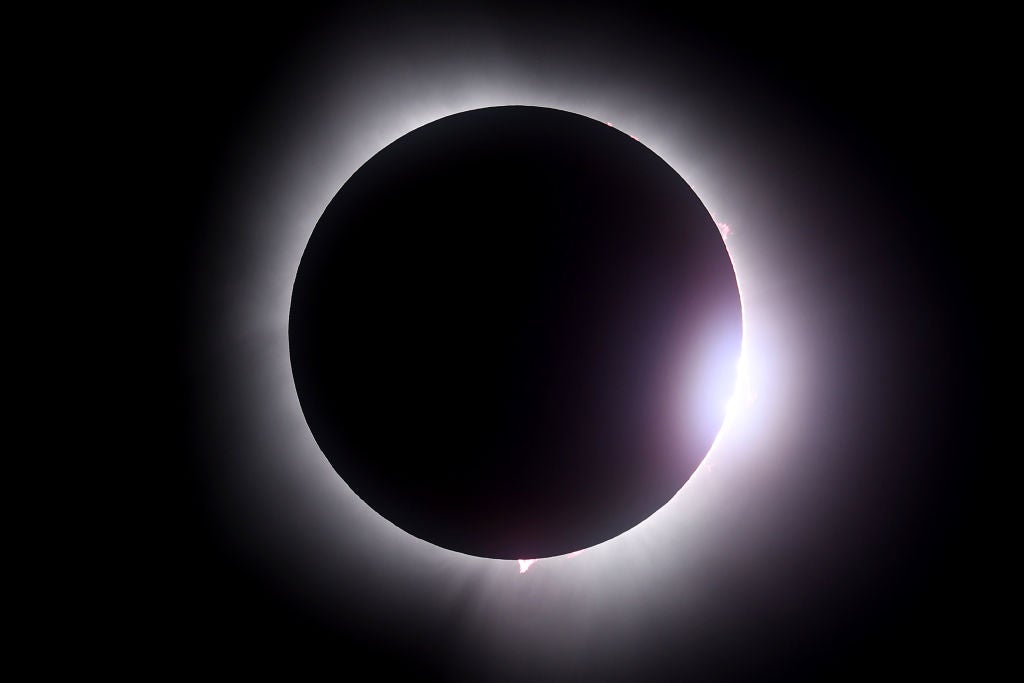
Villa is part of a growing group of “eclipse hunters” who travel around the world in search of the next extraordinary moment when the moon momentarily obscures the sun.
On 12 August, the first total eclipse will happen over Spain for 100 years, when the sun disappears for up to two minutes over a wide strip of Iberian sky, from the Balearic Island of Menorca in the south to Segovia, Bilbao, and Gijón in the north.
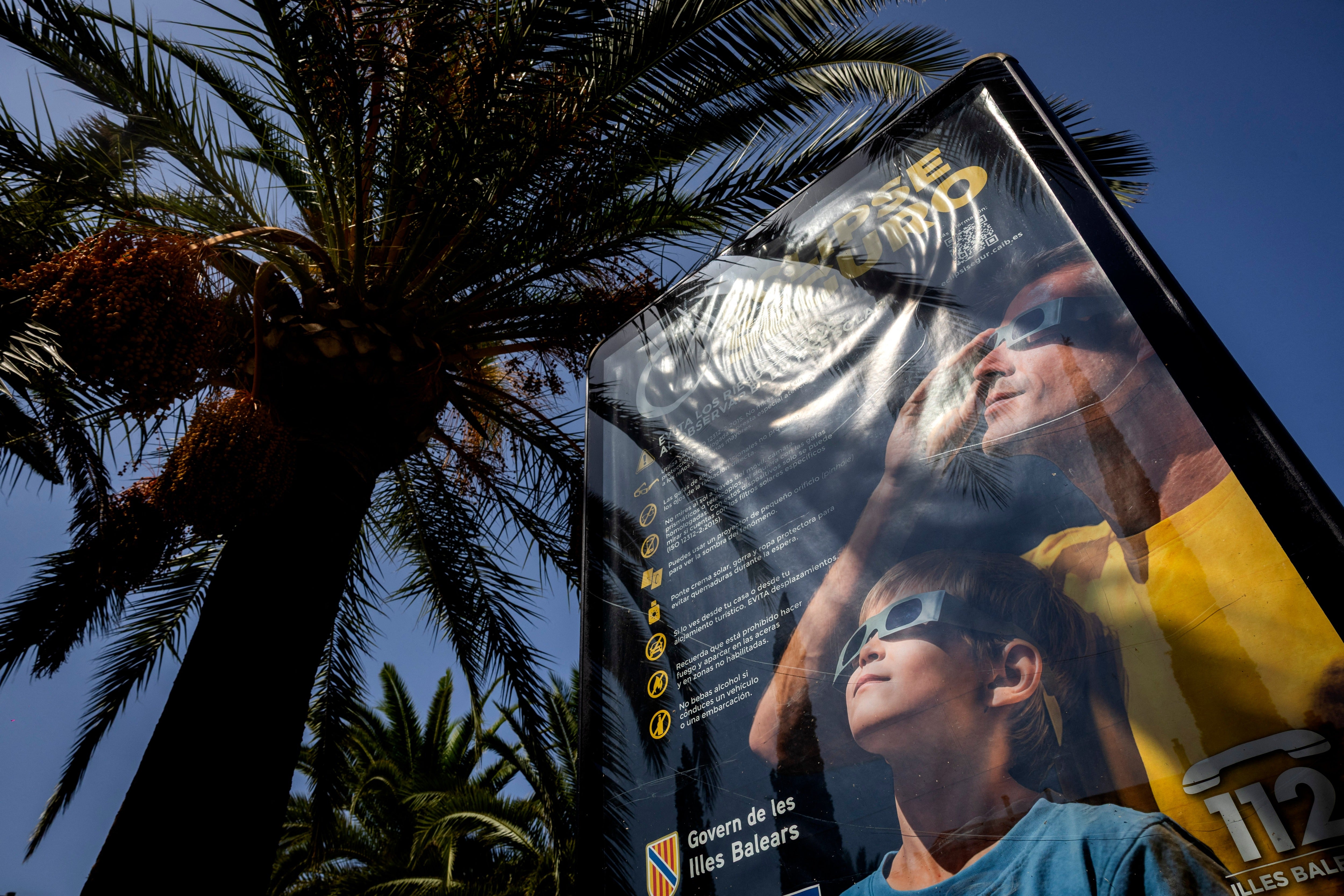
An estimated half a million people, from professional astronomers to the simply curious, are expected to travel to Spain to witness the spectacle first hand, with plastic eclipse glasses clasped to their eyes.

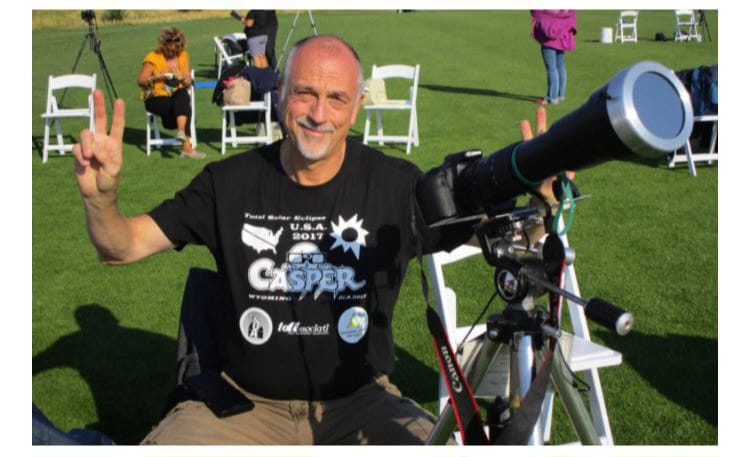
Since he was first smitten when he travelled to Aruba in the Dutch Antilles in 1998, Villa has travelled to Graz in Austria, Formentera in Spain, Tobruk in Libya, Hanjin in China, Siberia in Russia, Easter Island, Cairns in Australia, the Faroe Islands, Wyoming in the United States, Chile, Exmouth in western Australia and Durango in Mexico.
When he travels to Menorca in August, it will be his 13th solar eclipse.
But he never travels alone. Each time, Villa is accompanied by his “solar family” who share his fascination. It costs him about €2,500 to see eclipses if they are in Europe – travelling from his home in Tuscany, Italy – and about €5,000 if they are outside Europe in places like Chile or Australia.
However, Villa, 67, a retired bank worker, insists it is all worth it.
“The allure of an eclipse is magic. And every eclipse is unique and unrepeatable because of the sensations it evokes,” Villa says. “I always say I sound exaggerated when I say this. So, I invite people to come on this journey with me… but I also say: ‘Be careful, because the magic of eclipses has no antidote!’”
Yet Villa is an amateur compared to Ralph Chou, who has seen 20 total eclipses around the world since 1963 until 2024, from Brazil to China and Australia and Finland.
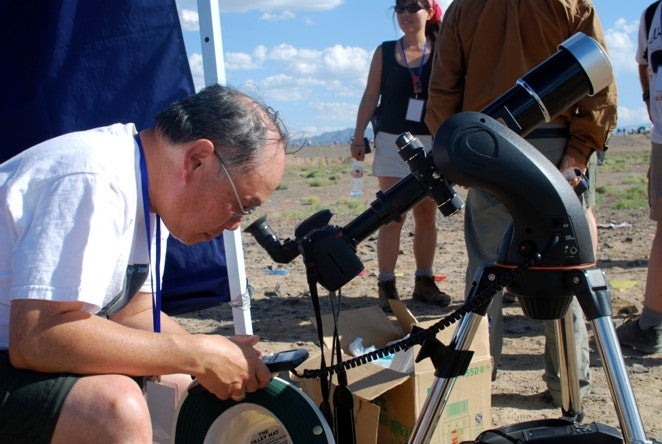
“Over the years I have seen a lot of very memorable eclipses. One of the best was in the Philippines because I was sitting beside the then-chief of defence Ramos, who later became president. I was also in Libya with Colonel Gaddafi,” said Chou, 75, a retired professor of optometry from Ontario, Canada.
“There are a lot of interesting places you get to which you would not want to go to normally.”
“The eclipse chasing community, the so-called umbraphiles, we know each other very well over. Umbra is the Latin word for shadows and philes is the word for enthusiast.”
“My wife keeps reminding me that if I had invested all the money I have spent on these trips, I would be a rich man! But it is fascinating to see these things.”
Paolo Volpini is another amateur. His day job is as a council worker in the Tuscan town of Piombino, in Italy. He is a relative newcomer to the select family of eclipse hunters; he has only seen four, in Austria, Easter Island, in the Sahara Desert in Libya and in Wyoming in the United States. Spain will be his fifth.
“I am 61 but I have loved astronomy since I was a young boy. Solar eclipses are the greatest show in nature. The special light, the reaction of people, they are special,” he says.
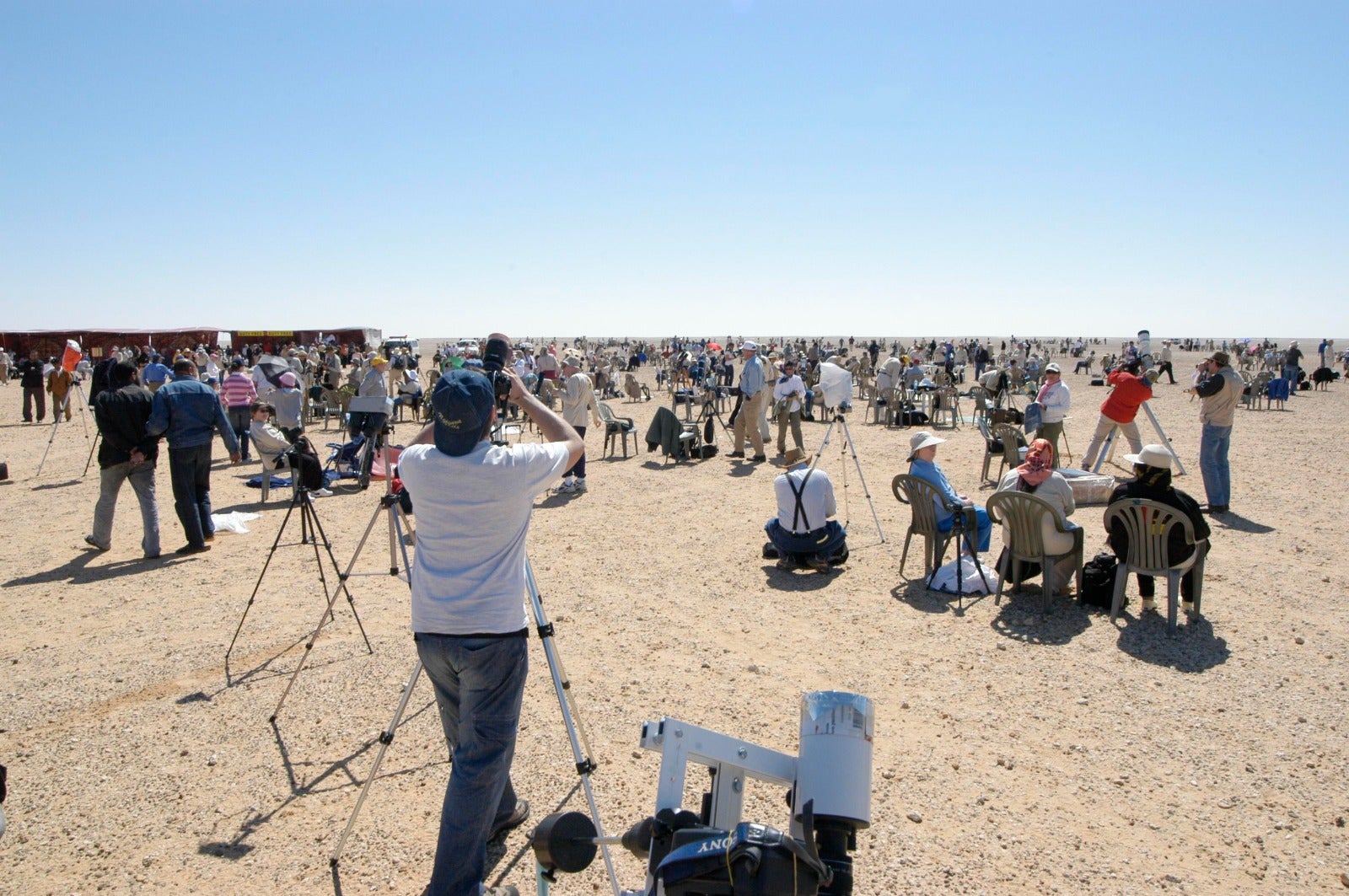
“Now we are going to Menorca where we want to take a picture of the sun above the sea. But in 2006, we were in the Sahara Desert in Libya where we shared this in the middle of the desert.
“Easter Island was the best. It was the first eclipse above those statues. We were on the shore, knowing there was nothing for thousands of kilometres. We were in the middle of nowhere.”
Volpini usually travels with his “other family” of eclipse lovers. This year he will travel with his wife to Spain.
“I like to be called an eclipse hunter,” he laughed. “I would go more, but I don’t have enough money or holidays. And my wife would not be happy!”
I think I have caught the bug. The first one impacted me so much both emotionally and professionally
Unlike many of her amateur fellow “eclipse chasers”, Ilana Macdonald has spent most of her life in the world of astronomy. She is a doctor of astrophysics who works at the Dunlap Institute for Astronomy and Astrophysics at the University of Toronto. Her job is to spread the word about the delights of studying the stars and the moon.
She is travelling to Segovia in Spain to spend up to one minute at most watching the eclipse – only her second experience. But she fears the spell has already been cast over her.
“I think I have caught the bug. The first one impacted me so much both emotionally and professionally. I understand why people travel the world to see these eclipses. I think I want to be an eclipse chaser,” Macdonald, 40, says.
She says that true eclipse hunters only travel to see “totality” – when the sun is completely obscured by the moon. Partial eclipses are just not worth the bother.
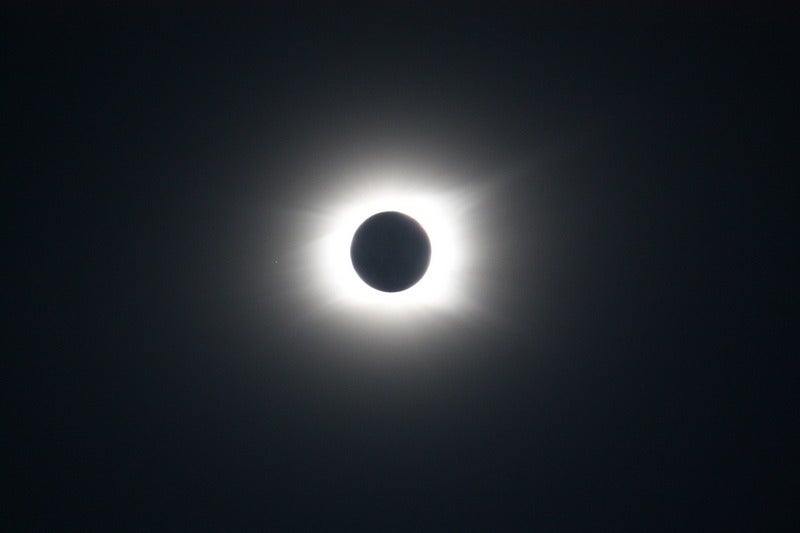
“Just seeing that black circle with this corona around is like a crazy experience. The other thing is it causes lots of environmental changes. You can see stars during the day. I saw Jupiter and Venus. “It gets noticeably cooler. It dips maybe 10C. All the wildlife suddenly reacts to it. The birds went quiet. The frogs started with nighttime songs. The dogs started barking,” she says.
“You don’t think it would impact so much. You can understand why ancient civilisations see it as a portent of doom.”
Macdonald explains that total solar eclipses happen in different parts of the world about every two years – but right now, the focus is on the eclipse happening next Wednesday.
When it comes to the best places to see the eclipse in Spain, Villa says: “Undoubtedly, the Balearic Islands, both for weather statistics and the fact that the eclipse will occur at sunset. Therefore, the eclipse’s image will be reflected in the sea!”
He explains there have never been any pictures taken of eclipses taken over the sea until now. However, other eclipse hunters who are in the know about the best places to witness the eclipse are heading to Castile and Leon, a region north of Madrid. While Ilana Macdonald is going to Segovia, a picturesque city north of the Spanish capital.
Join our commenting forum
Join thought-provoking conversations, follow other Independent readers and see their replies
Comments
Bookmark popover
Removed from bookmarks