We don’t learn from history; we don’t even learn from current affairs
The West’s actions against Iran are repeating recent historical events that have only caused more chaos in the Middle East, says Clive Stafford Smith


The only thing we learn from history is that we don’t learn from history. You’ve probably heard that before, and it’s a phrase I overuse. It must be modified for the situation in the Middle East: we don’t even learn from recent affairs.
I have spent a lot of time in Afghanistan recently, where the “war on terror” led to the longest ever American war. Estimates of the money spent on 21 years of Afghan carnage range up to $6 trillion (£4.5 trillion), and it caused tens of thousands of deaths. The result? Nothing achieved. The Taliban are back in power, running a state increasingly premised on gender apartheid, alienated from the Western world.
Our interventions in the region since the new millennium reflect a clear pattern: the US, the UK and their allies decrying evil governments, firing their Hellfire missiles from their Predator drones, and creating even greater chaos. We eventually leave, and bemoan the failure of each country in turn to metamorphosise into a democratic nirvana.
Always we had our excuses for dropping our bombs: in Afghanistan, it was September 11, though there was precious little evidence that Afghans had anything to do with it. In Syria, it was Isis. Apparently, we were on the verge of global destruction because of Iran. But these excuses – generally vastly overplayed – do not mask the theme that runs consistently through every one of these dreadful conflicts: in the words of singer Michael Franti, “You can bomb the world to pieces, but you can’t bomb it into peace.”
Sadly, but not totally surprisingly, catastrophe lingers over Iran. The only certainty there is that many people will suffer from the Trump-Netanyahu war.
Where are the plans? Nobody in the Trump administration mentions who might take over from the current regime in an imagined uprising. (Would anyone resort to the Shah’s son? If so, would he resuscitate SAVAK, the notorious security police?)
For now, assassinated supreme leader Ali Khamenei has been replaced by his son, Mojtaba Khamenei. Surprisingly, Iran did not seek Trump’s advice in selecting a new leader.
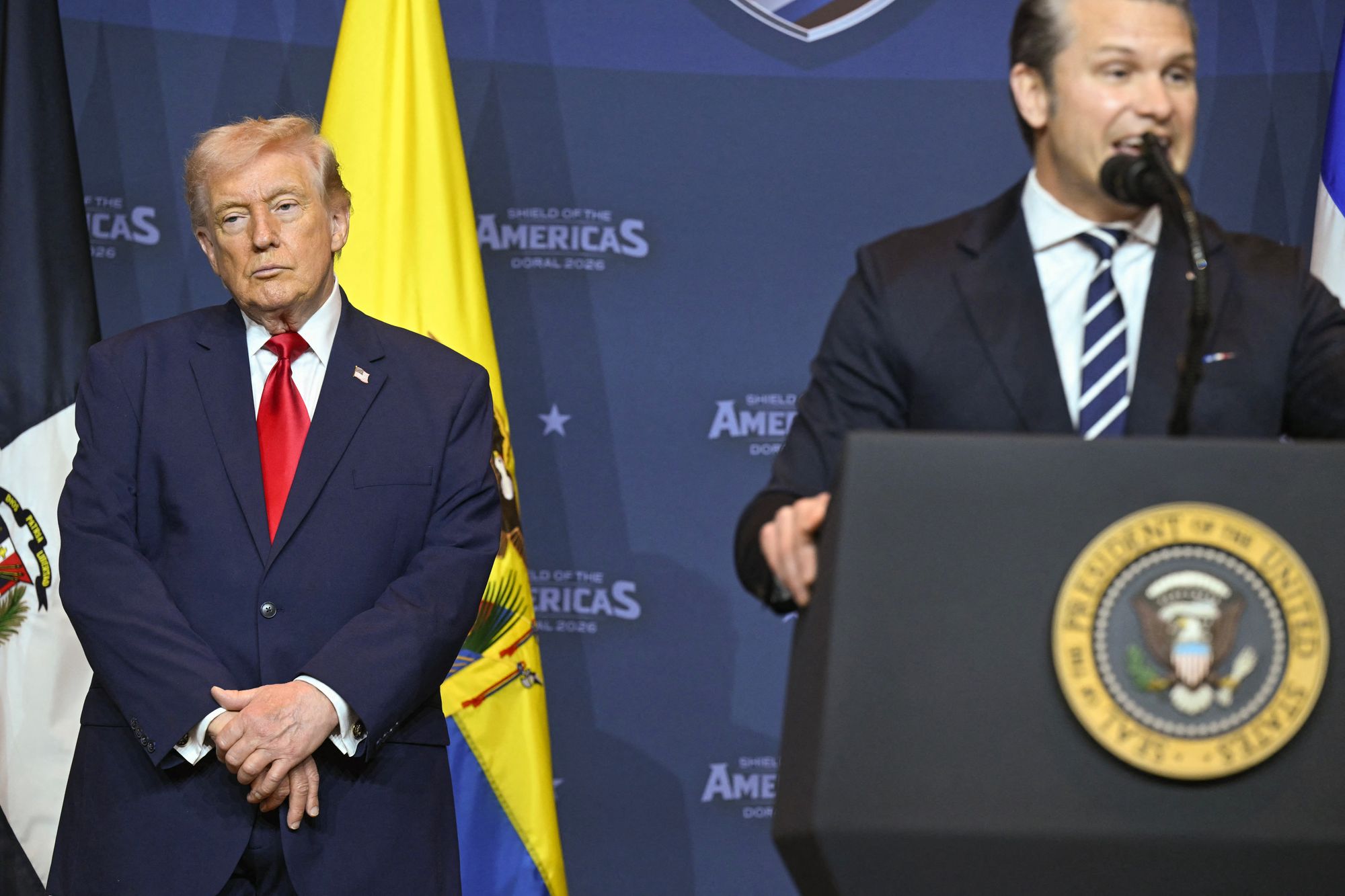
Trump’s defence secretary, Pete Hegseth, does not have much of a plan for his “Operation Epic Fury” either, beyond bombs and more bombs that will apparently ensure Iran cannot make nuclear weapons. “We will not relent until the enemy is totally and decisively defeated,” he warned.
Worryingly, his back-up plan seems to be for his team to encourage American soldiers that their labour may usher in the “End of Days” and the Second Coming of Jesus Christ (part of a strange Christian nationalist theory that I have often heard voiced in the US).
Some may hold out little hope for Trump, who believes that most rules do not apply to him. But here in the UK, Keir Starmer is proving to be a much greater disappointment. It is one thing to make a U-turn on the winter fuel allowance or the farmers’ inheritance tax, but surely he should be a little more careful on war.
He began (reasonably enough) by refusing to support this deranged conflict, but then rapidly rowed back once Trump said he was “not Winston Churchill”. Well, he didn’t need to be. Hitler was not at the Channel waiting to invade.
Starmer was once a human rights lawyer. He needs a plan and he needs to remember his principles, keeping his head when some across the parliamentary benches are losing theirs.
He needs to remember that there is not a Nobel War Prize. History can remind him that Harold Wilson refused to let the UK get involved in Vietnam, in retrospect a wise decision.
He should recall the Marshall Plan. Its precursor, the 1944 Morgenthau Plan, would have dismantled all of German industry, sent Germans to labour camps as “reparations”, and (according to Herbert Hoover) caused some 25 million deaths from starvation.
Instead, the Marshall Plan invested $150bn (around £113bn) in today’s money into Europe, allowing West Germany’s economy to expand without pause over a quarter-century, rendering it a stable country and a force for peace in Europe.
In 2001, had the US invested a fraction of the $6 trillion it spent bombing Afghanistan in developing it, that sum would have helped to turn a nation that had already been ravaged by war since 1979 into a modern and prosperous country. Thousands would not have died.
Yet here we are again, with history repeating itself, ignored by those who should know better. There is no plan. The dogs of war are unleashed.
It is time for another million-person march against a Middle East war. If, that is, such good sense is not immediately equated with terrorism.
Clive Stafford Smith OBE is a human rights lawyer and Gresham College professor of law who will be giving a free lecture at the college on recent Middle Eastern wars on Thursday 19 March at 6pm
Join our commenting forum
Join thought-provoking conversations, follow other Independent readers and see their replies
Comments
Bookmark popover
Removed from bookmarks