I fear the World Humanoid Robot Games just altered our future
The extraordinary sight of a robot breaking Usain Bolt’s sprint record is a new milestone in the rapid march of AI technology that could render obsolete far more than just Olympic world records, says Sean O’Grady


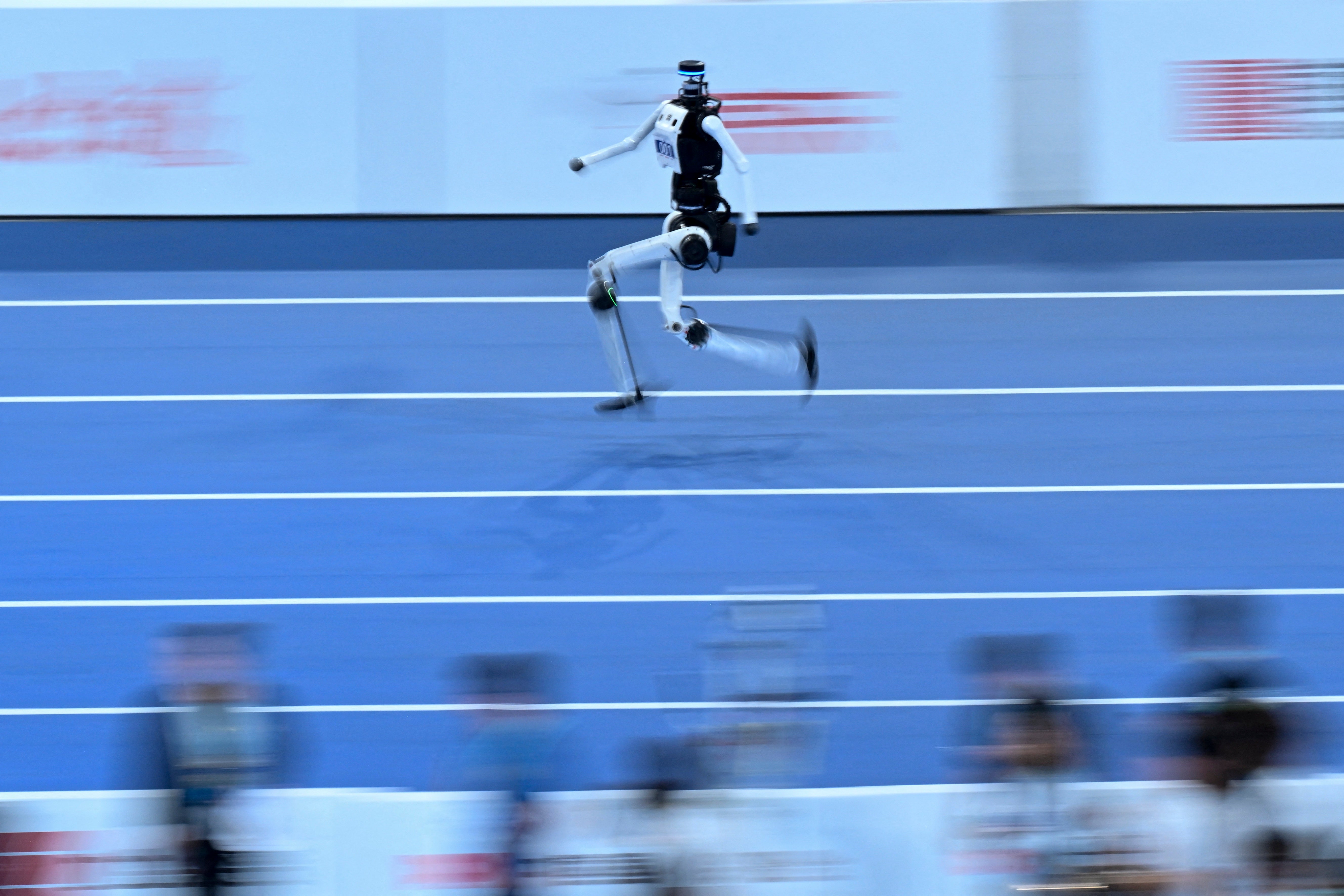
This week, a robot “athlete” shaved a few milliseconds off Usain Bolt’s 100m sprint world record, which the eight-time Olympic gold medallist set in 2008 when he ran it in 9.58 seconds. A humanoid by the name of Tiangong Ultra completed it in 9.39 seconds.
Mr Ultra – or perhaps just Tian for short – should be congratulated, even though he/she/it hasn’t got the hang of slowing down yet, and smashed into the big plastic mattress placed at the end of the track by organisers of the second World Humanoid Robot Games in Beijing. A few bits of Tian’s “body” flew off on impact.
Nothing that can’t be repaired, though. No robot is ever going to have its career ended by a torn Achilles.
Naturally, the games in the Chinese capital, being designed by inevitably sadistic human beings, also had events in which the robots were made to beat the hell out of one another for laughs. I’d be surprised if someone didn’t have a bet on the outcome.
(Maybe Britain’s fox hunting community could construct a challenge whereby a robot is chased across the English countryside to be torn to bits by the hounds, with pretend blood splattered everywhere. It also follows that, as we already see in the Ukraine war, the new technologies will be deployed to kill people as well as robots.)
So much for the Robot Olympics circus… what about the bread?
Well, the games have our daily drudge covered, too. Away from the stadium, a series of domestic tasks were taken on by the humanoids. For example, a hotel was requisitioned so that a team of robo-maids could get cracking on making beds and doing the ironing, hanging out the laundry and tidying up a messy room.
To add to the jeopardy, the chores were interrupted by an unscheduled task – taking in a parcel. Obviously, this also required Usain Bolt-style speed to get to the door before the Amazon driver, presumably also a robot, legged it.
As spectacles go, watching robots is extremely impressive – and chilling. Here we have yet another graphic example of how robots could one day replace humans in the hotel business, and indeed take over all sorts of tiresome tasks in the home. And, if the prophecies set out in countless Terminator films come to pass, kill us all, too.
I still want one of the fully automated ones. My very own robot butler/valet/gardener/cook/skivvy would be a thing of wonder, freeing up leisure time and liberating me from housework. Every home should have one. Give it five years…
More broadly, the robot revolution would end our productivity problem at a stroke, creating a world of plenty, a “leisure hive” society that was imagined by the likes of John Maynard Keynes, Aldous Huxley and HG Wells almost a century ago, and might soon be a reality.
In such a new society, with robotics combining with AI, the notion of economic scarcity would be almost abolished, and living standards would rise dramatically. The question of so-called intergenerational fairness would be resolved in a few years, as the robots create, for example, plentiful, high-quality new homes. If today we don’t have enough carpenters, bricklayers, electricians and scaffolders, let the humanoids take over. A generation of young people who seemed to have such dismal prospects only a few years ago will soon be the most fortunate in human history.
The obvious problem with this is what the people who used to earn a wage will do for an income. In an economy transformed by AI and robotics, fewer people will be earning a wage, and will be forced to rely on social security, if it still exists. Mass leisure could equate to mass unemployment.
Those who will do well out of the next Industrial Revolution are the owners of capital – the folk who are fortunate enough to own shares in the companies that will benefit. That means the new ones that create the AI and manufacture the robots; the older companies that will be fit from the radical reduction in costs – anything from distribution and hotels to accountancy and taxis; and those involved in power generation and water cooling for the mighty data centres.
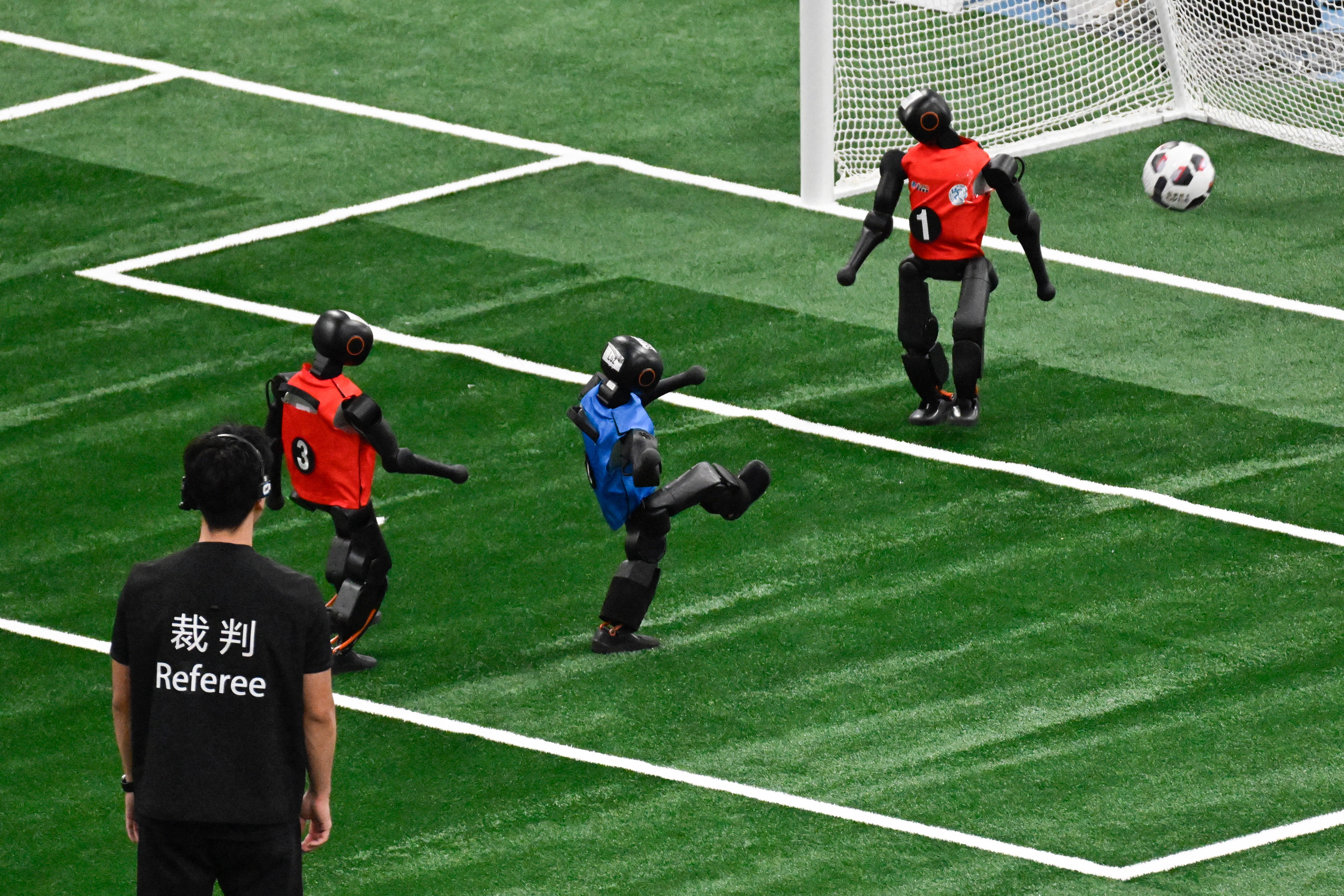
There’ll still be space for a few trades the robots cannot quite compete in – football players spring to mind, having watched Humanoids United FC playing Robot Wanderers in Beijing. I reckon Erling Haaland and his counterparts have little to fear. Newspaper journalists may have less to look forward to.
What economists call the factor distribution of income – wages v profits – hitherto of interest to Marxist students, will become a trendy, indeed central, area of study. But the decisions about how to ensure a “fair” distribution of income and wealth will be essentially political.
I have to say that the Chinese system of government, so hideous in many respects, is much better suited to sorting out that question than our Western, more laissez-faire, market-driven systems. If history is any guide, we will most likely drift into a far more plentiful world, but one disfigured by grotesque inequalities in wealth and income, and perhaps spiralling into chaotic climate change.
The second World Humanoid Games have been entertaining, but they have also been a line in the sand. To us humans, the coming robot revolution will prove a mixed blessing.
Join our commenting forum
Join thought-provoking conversations, follow other Independent readers and see their replies
Comments
Bookmark popover
Removed from bookmarks